What Is a Leadership Self-Appraisal, and Why Does It Matter?
Not a performance review. Not a personality quiz. A self-appraisal is structured self-examination with a practical outcome: a development plan that actually fits you.
By Arun Haridharshan
Most leaders have been assessed at some point. A personality profile during onboarding. A 360 as part of a leadership programme. A competency framework review in a performance cycle. The results were interesting for a few days and then quietly filed.
A leadership self-appraisal is different in purpose. The goal is not to produce an interesting profile. It is to produce an accurate picture of how you currently operate, specific enough to build from, linked directly to a development plan, and designed to be repeated so you can track whether anything is actually changing.
What it covers
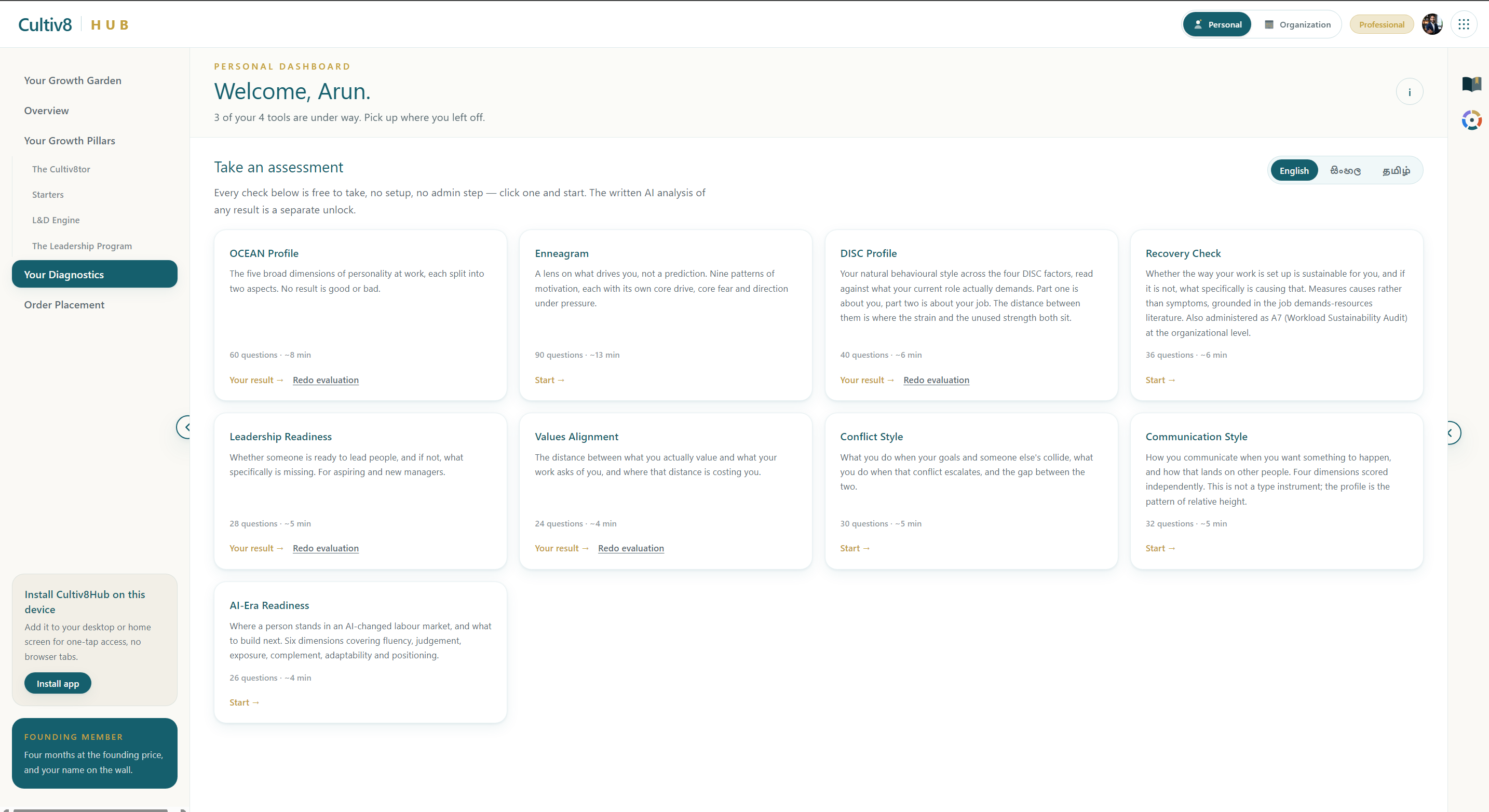
A well-structured self-appraisal looks at several distinct dimensions, because no single instrument gives you the full picture:
- Personality at work. How you naturally process information, make decisions, engage with others, and respond to pressure. Instruments like the OCEAN profile or DISC give you a map of your baseline tendencies, which is different from a prescription for how to behave.
- Values alignment. The distance between what you say you value and what your actual work demands of you. A high gap here is a significant predictor of burnout and disengagement, and most people are not aware it exists until they look.
- Behavioural defaults under pressure. Your conflict style, your communication patterns, how you respond when challenged. These are the behaviours that matter most and that are hardest to see from inside.
- Leadership readiness and specific gaps. Where you are on a developmental spectrum for the specific demands of leading people, with enough precision to know what to work on rather than just what level you are at.
Why self-assessment alone is insufficient
The self in self-appraisal is the starting point, not the whole method. When you assess yourself, you are filtering through your own self-concept, which tends to be both more flattering and more stable than what the people around you actually experience.
A complete appraisal includes multi-rater data: structured feedback from the people who work alongside you. Not the informal impressions that circulate in corridors, but a designed instrument that asks specific behavioural questions and aggregates the responses so individuals cannot be identified. This is what a 360-degree assessment does, and the combination of self-assessment with multi-rater data is where the most useful information lives.
The gap between how you see yourself and how others experience you is not a flaw. It is data. The question is whether you ever get to see it.
What makes the output useful
An assessment result that sits in a PDF is not useful. What makes a self-appraisal useful is what happens next.
The output of a good self-appraisal is a development plan that is specific to your actual results, not a generic list of leadership competencies. It names two or three development priorities with enough behavioural specificity that you know what to actually do differently. It connects to resources and structured learning that address those specific areas. And it sets a timeline for retaking the key assessments so you can see whether the work is producing movement.
How often to do it
The minimum useful frequency is once a year for a full appraisal, with shorter check-ins on specific instruments every six months. Some instruments, particularly those that track alignment between your values and your current role, are worth running more frequently because that gap shifts with role changes, team changes, and life circumstances.
The goal over time is not to produce a perfect profile. It is to build a continuous picture of how you are developing: what moved, what did not, what you worked on that turned out to be harder than expected. That ongoing record is one of the most useful things a leader can have and one of the rarest.
Leadership development that actually sticks.
The Cultiv8Hub platform: a program, a mentor, diagnostics, and a growth plan built for your real role.
Explore Cultiv8Hub