How Is AI Mentoring Different From a Human Coach or a Course?
Both questions deserve a straight answer. Here is what changes when your mentor is always available, always remembers, and has no stake in keeping you comfortable.
By Arun Haridharshan
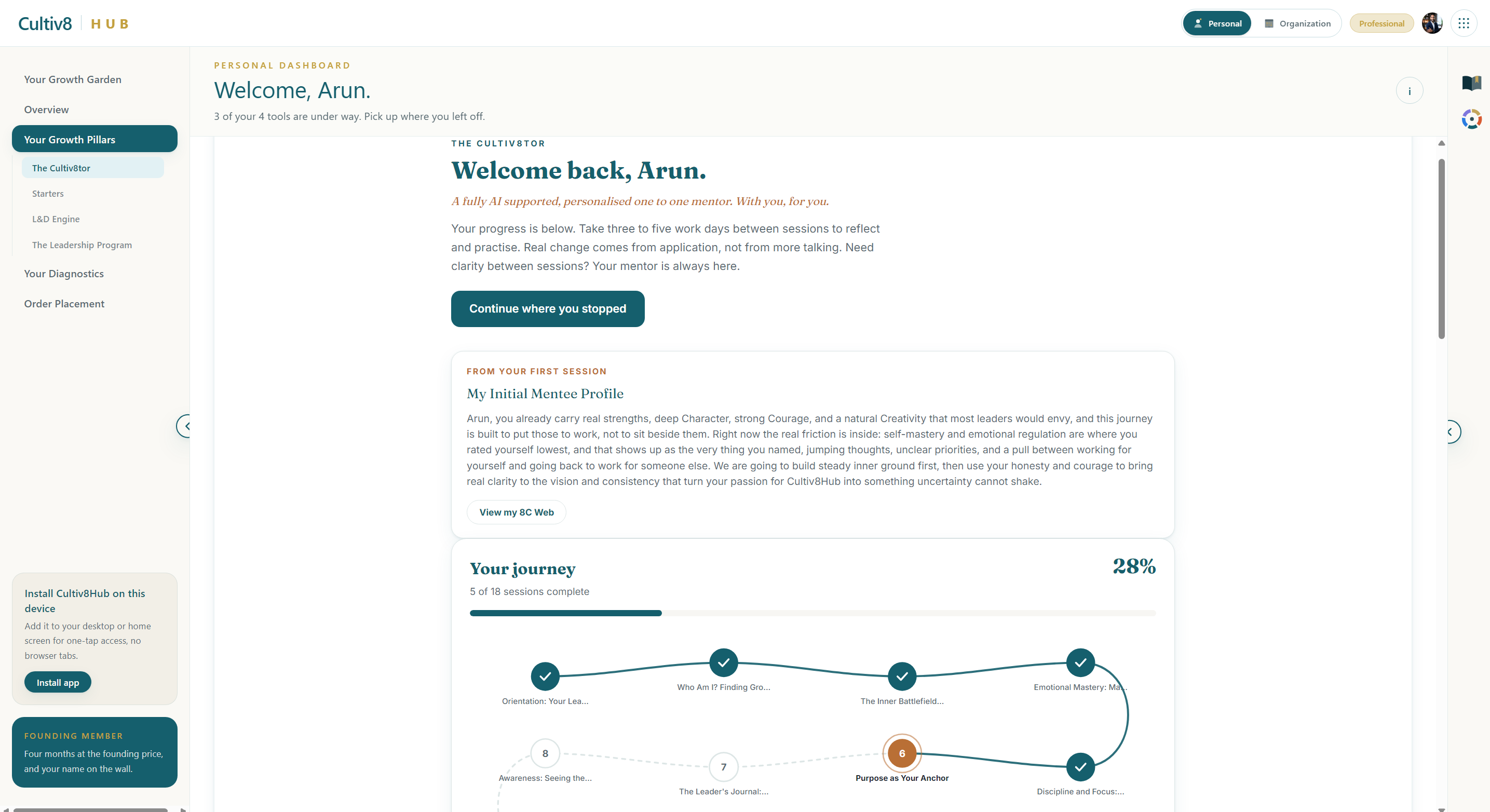
When people ask how an AI mentor compares to a human coach, they are usually asking one of two things. Either they are skeptical and looking for the catch, or they already see the value and want to understand the shape of it more clearly. Both questions are worth answering honestly.
What a human coach does that AI cannot replicate
A skilled human coach brings something that no current AI system fully matches: the experience of having lived through similar situations, the ability to read the room with a body in it, and the particular quality of attention that comes from one human being choosing to be fully present with another.
Great human coaches catch things in the silence between words. They have a feel for when a client is avoiding something even when the words are fluent. They bring their own history with failure, with difficult people, with the specific texture of being a leader in a real organisation, and that lived context shapes what they ask and how they respond.
If you have access to a skilled human coach who knows your industry, your context, and your particular challenges, that relationship has a quality that an AI system is not yet positioned to replace.
What changes when the mentor is AI
The honest answer is that most people do not have access to a skilled human coach. The economics do not work: a good coach charges rates that price out the majority of working leaders, especially earlier in a career when the development need is often highest. And even when access exists, coaching typically happens in weekly or fortnightly sessions. The rest of the time, the leader is on their own.
An AI mentor changes four things in ways that matter:
- Availability. It is there between sessions, not just during them. The moment something difficult happens at work, you can think it through with your mentor rather than waiting a week to process it in retrospect.
- Memory. Every session, every insight, every commitment carries forward. You do not repeat yourself. The mentor holds your arc, not just the current session.
- No social stakes. People tell an AI things they would not tell a human coach because there is no relationship to protect, no embarrassment, no worry about being judged. That honesty produces more useful conversations.
- Consistency. The quality of attention does not vary by how rested the AI is or whether it has had a difficult day. Every session gets the same quality of engagement with your specific situation.
How it differs from a course
A course teaches content. It gives you frameworks, concepts, and examples, and the best courses are genuinely useful for that. But a course does not know you. It delivers the same material to every person regardless of what they actually need.
An AI mentor inverts this. It starts with you: your situation, your role, your patterns, your development areas as they actually are. The content it draws on is shaped around what you specifically need rather than what the curriculum assumes every learner needs. The conversation is the product, not a delivery mechanism for content that exists separately from you.
A course teaches leadership to everyone the same way. A mentor works with this leader, in this situation, with these specific challenges.
The honest limitations
An AI mentor is not a therapist and should not be used as one. When the work touches on deep psychological patterns, trauma, or clinical concerns, those belong with a qualified human professional.
It also cannot tell you what the culture of your specific organisation actually feels like, or what your specific boss is actually thinking. It works from what you bring to the session. What you bring shapes what you get back.
The frame that fits best is complementary rather than substitutional. An AI mentor gives you something to work with every day, between the rarer moments of human coaching, human feedback, and your own experience. It is the daily practice that makes the other things stick.
What the research says
The evidence base on what makes development stick is consistent: spaced repetition, reflection embedded in practice, and accountability over time. An AI mentor can provide all three at a cost and accessibility level that human coaching cannot match at scale. Whether that is the right trade for any individual depends on what they need and what they have access to.
The question is not whether AI mentoring is better than human coaching. The question is whether it is better than the nothing that replaces human coaching for most people most of the time. On that question, the answer is straightforwardly yes.
Leadership development that actually sticks.
The Cultiv8Hub platform: a program, a mentor, diagnostics, and a growth plan built for your real role.
Explore Cultiv8Hub